
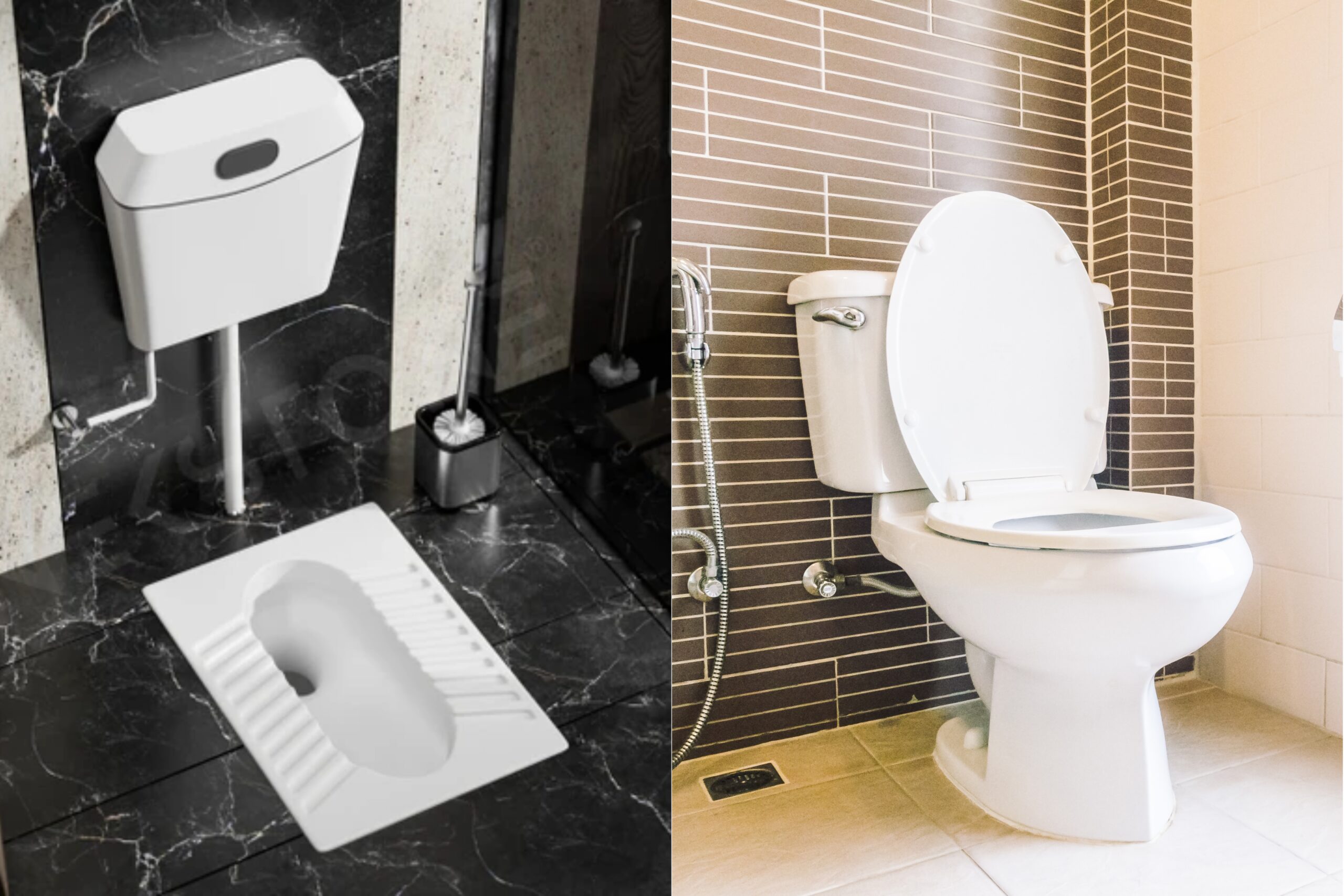
Many people around the world use two main types of toilets — Indian toilets (also called squat toilets) and Western toilets (also called sitting toilets or commodes). Both have their own benefits and disadvantages. In this blog, we will compare Indian Toilet vs Western Toilet, learn about their health effects, and see why Ayurveda and science support using Indian toilets.
What Is an Indian Toilet?
An Indian toilet is the traditional style used in India and many Asian countries. You squat on the floor with your knees close to your chest. There is no seat to sit on — you use your legs to balance and support your body.
What Is a Western Toilet?
A Western toilet is the kind most people use in Western countries. It has a raised seat where you sit, just like on a chair. It looks more modern and feels more comfortable for some people.
Pros and Cons of Indian Toilet vs Western Toilet
Pros of Indian Toilet
Here are the main benefits of Indian toilets:
1. Better Digestion
When you squat, your stomach and intestines are in a natural position. This helps in smooth bowel movements and reduces constipation.
2. Helps Prevent Colon Diseases
Squatting allows the intestines to empty completely. It reduces the chance of problems like colon cancer and piles (hemorrhoids).
3. Strengthens Muscles
Using an Indian toilet strengthens your legs, knees, and hip muscles. It is like doing a mini exercise every day.
4. More Hygienic
Since your body does not touch the toilet surface, it is more hygienic, especially in public restrooms.
Cons of Indian Toilet
Here are some disadvantages of Indian toilets:
1. Hard for the Elderly or Injured
Older people or those with knee pain may find squatting difficult.
2. Balance Problems
Some people may have trouble balancing, especially if they are not used to squatting.
3. Can Be Messy
If not used properly, water may splash, making cleaning harder.
Pros of Western Toilet
Now let’s look at the benefits of Western toilets:
1. Comfortable and Easy to Use
You can sit down easily without bending or squatting. It is more comfortable for older people and those with joint pain.
2. Modern and Stylish
Western toilets often come with features like flush systems, bidets, and even warm seats.
3. Convenient for Long Use
You can sit longer and even read or use your phone (though that’s not healthy!).
Cons of Western Toilet
Here are the drawbacks of Western toilets:
1. Causes Constipation
Sitting straight can block the rectum, making it harder to pass stool.
This can lead to constipation or piles.
2. Less Hygienic
Since your body touches the seat, germs can spread easily if not cleaned properly.
3. Weakens Leg Muscles
Using a Western toilet does not involve any squatting, so your leg muscles get weaker over time.
Why Indians Should Use Indian Toilets (Ayurveda + Science)
According to Ayurveda, the traditional Indian science of health, the way you excrete waste affects your Vata (air energy) and Agni (digestive fire). Squatting keeps your spine straight, your organs relaxed, and helps your body release waste fully.
Ayurvedic Benefits
- Squatting posture helps balance the body’s energies.
- It supports healthy digestion and better metabolism.
- It improves blood flow in the lower body.
Scientific Reasons
Modern science also supports this. When we squat, the recto-anal angle becomes straight, making it easier to pass stool without pressure. When we sit (on Western toilets), the angle bends, causing strain and incomplete bowel movements.
Cultural Connection
In India, people are used to sitting cross-legged — while praying, eating food on the floor, or doing yoga. This flexibility helps them squat easily. In Western countries, people rarely sit on the floor, so their leg joints become stiff. That’s why many Westerners cannot fold their legs or sit in squatting positions comfortably.
Using Indian toilets can help Indians keep their natural flexibility, improve digestion, and stay connected with traditional health habits.
Which One Should You Use?
If you are healthy and young, an Indian toilet is better for your body. It keeps your digestion strong and muscles active. But if you are old, injured, or pregnant, a Western toilet may be safer and easier to use.
A good option is to use a “squat stool” or “toilet footrest” with a Western toilet. It lets you sit but still keeps your legs in a semi-squat position — giving you the best of both worlds.
Comparison Table
| Feature | Indian Toilet | Western Toilet |
| Posture | Squatting | Sitting |
| Comfort | May be hard at first | Very comfortable |
| Health Benefits | Improves digestion, reduces constipation | Easy for elderly, but less healthy |
| Hygiene | No body contact | Needs frequent cleaning |
| Flexibility | Keeps body flexible | May cause stiffness |
| Culture | Traditional Indian style | Western lifestyle |
| Ayurveda | Supports energy balance | Can disturb digestion |
| Muscle Activity | Engages core, legs, hips | Very little muscle activity |
| Time in Toilet | Usually faster | People sit longer (often with phone use) |
| Water Usage | Uses more water for cleaning | Usually less water for flushing |
| Cost | Low-cost installation and repair | Expensive setup and maintenance |
| Space Required | Needs less space | Requires more space and fittings |
| Comfort for Elderly | Difficult for seniors or injured | More comfortable for seniors |
| Infection Risk | Low (no contact) | Higher if seat not cleaned |
| Odor Control | Better air flow, less odor | May trap odor if ventilation is poor |
| Body Alignment | Natural spine and colon position | Bent rectum causes strain |
| Environmental Impact | Simple design, eco-friendly | Needs more materials and water |
| Child-Friendly | Hard for small children | Easier for kids to use |
| Usage in Public Areas | Common and practical | Needs constant cleaning |
| Overall Health Impact | Excellent for digestion and posture | May cause constipation, piles |
FAQs
1. Which toilet is healthier — Indian or Western?
The Indian toilet is healthier for digestion and bowel movement, while the Western toilet is more comfortable for people with joint or mobility issues.
2. Can we use a Western toilet like an Indian toilet?
Yes, by using a toilet stool (like a “Squatty Potty”), you can raise your legs and get a similar squatting position.
3. Is squatting safe for everyone?
Squatting is safe for most healthy people. But those with knee, hip, or balance problems should be careful.
4. What does Ayurveda say about toilets?
Ayurveda supports natural squatting posture because it helps the body remove waste completely and keeps the digestive fire (Agni) strong.
5. Why can’t Western people squat easily?
Because they rarely sit on the floor or fold their legs. Over time, this reduces joint flexibility, making squatting difficult.
Final Thoughts
Both Indian and Western toilets have pros and cons.
But for health, hygiene, and tradition, the Indian toilet wins. It supports digestion, strengthens your body, and connects you to a natural lifestyle followed for thousands of years in India. If possible, try using an Indian toilet — or at least mimic the squatting posture while using a Western one.
Your body will thank you!
Read More:
Avneet Kaur Saree Images: The Pink Saree Look Everyone’s Talking About
About the Author